
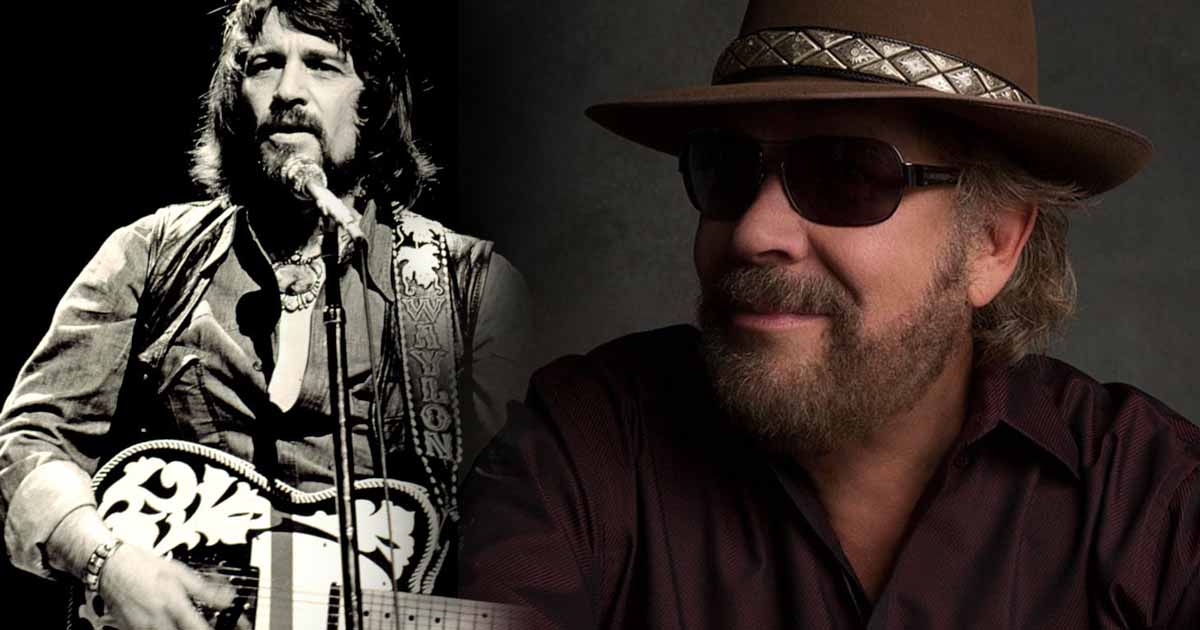
There are nights in country music history that feel larger than life—moments when the past and present come together in a way that no one in the room will ever forget. February 16, 2002, was one of those rare, unforgettable evenings.
On that day, Hank Williams Jr. stepped back onto the stage of the Grand Ole Opry for the first time in more than twenty years. It was not just a return—it was a deeply emotional homecoming, one driven by loss, respect, and a profound sense of loyalty.
Just days earlier, the world of country music had been shaken by the passing of Waylon Jennings—a towering figure whose voice, spirit, and defiance had helped redefine the genre itself. His absence was felt not only by fans, but by the very artists who had stood beside him, learned from him, and carried his influence into their own music.
For Hank Williams Jr., this was more than a tribute—it was a personal moment of reflection. Waylon Jennings had not only been a fellow artist, but also a guiding force in what became known as the Outlaw Country movement. Together with others, they challenged the polished Nashville system, choosing instead to create music that was raw, honest, and unapologetically real.
That night at the Opry, the atmosphere was heavy with emotion. The historic stage—so often filled with celebration—felt different. There was a quiet reverence in the air, as if everyone present understood they were witnessing something far more meaningful than a typical performance.
Hank Williams Jr.'s return carried its own weight. His absence from the Opry for over two decades had become part of country music lore. Yet in that moment, none of that mattered. What mattered was the reason he came back.
He came back for Waylon.
Standing under those familiar lights, Williams honored a man who had helped shape not only his career, but the very direction of country music itself. It was a reminder that beyond rivalries, beyond time, and beyond distance, there exists a deep bond among artists who share the same road.
Waylon Jennings had always stood as a symbol of independence. His music spoke to those who felt like outsiders, to those who refused to follow the expected path. He brought a new voice to country music—one that was gritty, soulful, and fiercely authentic.
And that influence could be felt on every note played that night.
As the tribute unfolded, it became clear that this was not just about remembering a legend—it was about acknowledging a legacy that would continue to live on through every artist who had been touched by Waylon's music.
For the audience, it was a powerful reminder of how deeply music can connect people. For the performers, it was something even more personal—a chance to say goodbye, to show gratitude, and to honor a friend whose voice had helped define an entire era.
In many ways, Hank Williams Jr.'s return symbolized something greater than a single performance. It represented respect for tradition, loyalty to friendship, and the enduring power of influence.
Even after more than twenty years away, the Opry stage welcomed him back—not with fanfare, but with the quiet understanding that some moments transcend history.
And as the night came to a close, one truth stood above all else:
Waylon Jennings may have been gone, but his spirit remained—in the music, in the memories, and in the hearts of those who stood on that stage in his honor.
Because legends like him never truly leave.
They live on in every song, every story, and every artist brave enough to walk the path they once carved.
And on that unforgettable night in February 2002, the world was reminded that some legacies are simply too powerful to fade.