

Introduction:
A Voice That Never Left: The Night Randy Owen Stood Still and Said Everything
There are nights that entertain… and then there are nights that stay with you—long after the lights dim and the music fades.
This was one of those nights.
There were no fireworks.
No dramatic entrance.
No attempt to build anticipation.
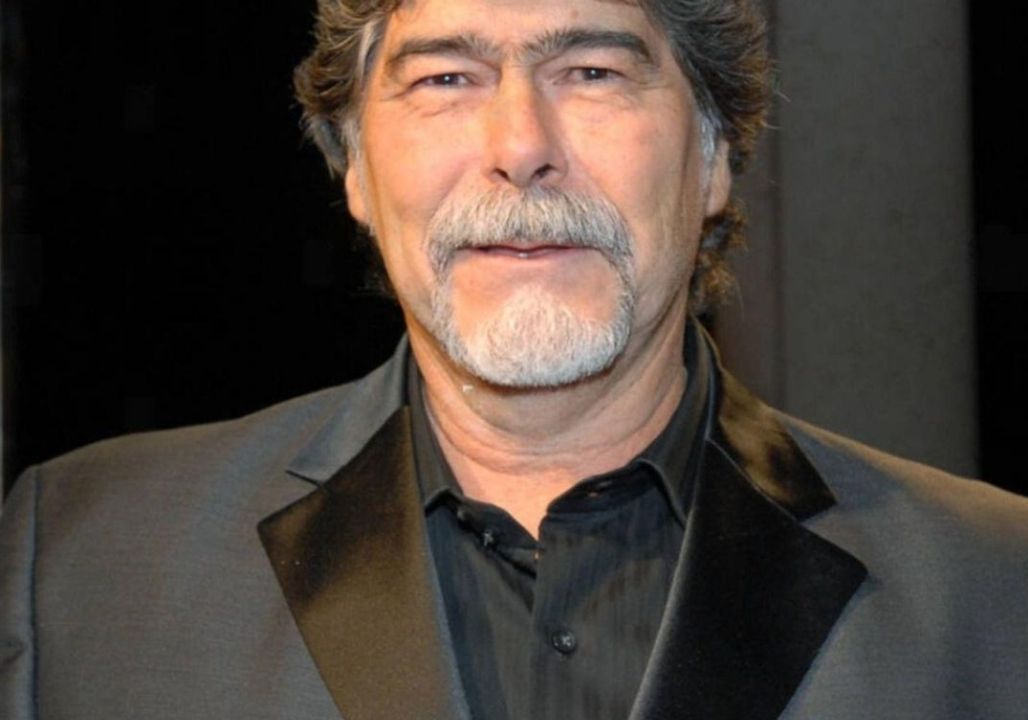
Only Randy Owen—75 years old—walking slowly toward a single microphone, carrying with him a lifetime of music, memory, and meaning that could never be measured by charts or accolades alone.
From the moment he stepped into the light, something shifted.
Not loudly.
Not suddenly.
But in a way that settled quietly across the room—a shared, unspoken understanding that this was not going to be just another performance.
And then, he began.

The opening notes of Angels Among Us did not arrive with force. They came gently. Familiar. Almost fragile. Yet deeply rooted in the lives of those listening.
And in that instant, everything changed.
The room stilled.
Not in silence alone, but in presence—in the way people become completely aware of a moment that feels personal, even in a crowd of strangers. Hands reached for one another. Not out of habit, but instinct. As if the music itself had drawn them closer, reminding them of something shared, something understood without explanation.
Randy Owen did not rush.
He didn't need to.
Each lyric unfolded with a quiet honesty that cannot be rehearsed. His voice carried time within it—not as something fading, but as something lived. Every note held the weight of years, of experiences that had shaped not just the sound, but the meaning behind it.
This was not about perfection.
It was about truth.
And the audience felt it.
Every word seemed to land deeper than expected—not because it was louder, but because it was real. For many, the song had always held significance. But in that moment, it became something more.
A memory.
A reflection.
A connection to people they had loved, lost, or carried with them through life's most difficult seasons.
And then came the final note.
It faded slowly. Gently.
And when it was gone—
No one moved.

The silence that followed was complete. Not empty, but full—filled with everything the moment had stirred. It was the kind of silence that speaks louder than applause, the kind that holds emotion in place just a little longer.
Then, almost hesitantly, the applause began.
Soft at first. Uncertain.
As if no one wanted to break what had just been created.
But it grew.
And grew.
Until it became something unstoppable.
A standing ovation that stretched on—nearly eight minutes of gratitude, of recognition, of something deeper than admiration. Some called his name. Others simply stood, clapping, unable to stop. Not because it was expected, but because it was necessary.
A way to hold onto the moment.
A way to say thank you.
Because they understood.
This was not just a performance.
It was a reminder.
Through it all, Randy Owen remained still. His hands rested gently on the microphone stand—the same quiet strength that has defined him for decades. He didn't speak. He didn't need to.
Everything had already been said.
Through the music.
Through the silence.
Through the applause that refused to fade.
Because some voices don't disappear.
They don't fade with time.
They simply wait.
And when the moment is right, they return—not to prove anything…
But to remind you why they mattered all along.